SSR Microservice for Coforge | Edge One Solutions Case Study

Integration of a New Microservice with a Legacy System for Coforge

Serwis Coforge prezentowany na ekranie laptopa, ilustrujący projekt rozwiązania cyfrowego realizowany przez Edge One Solutions.

Project overview

Client: CoforgeSector: IT services / enterprise / BFSIModel:IT outsourcingArea: microservices / SSR / legacy system

Edge One Solutions supported Coforge by providing IT specialists responsible for developing a microservice for SSR data handling.

The project included data saving and reading, conversion into a format compatible with the legacy system, and integration of the new module with the existing environment.

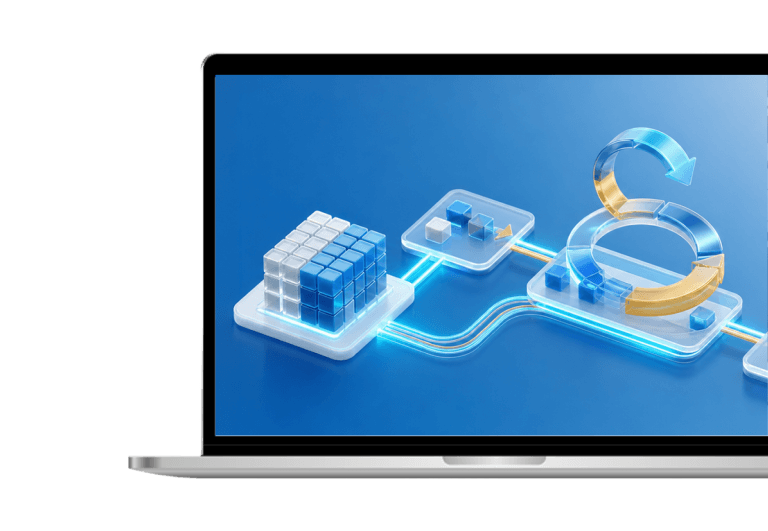
Edge One Solutions supported Coforge in designing and developing a microservice for saving and reading SSR data, data conversion, and legacy system integration.


Tools and technologies used

  • Challenge

    Coforge needed support in designing and developing a module responsible for saving SSR data in one of its microservices.

    The key challenge was converting stored data into a format understood by the legacy system, enabling verification and further use in the existing environment.

    The project required combining a new microservice-based approach with the existing architecture while maintaining data consistency, clear integration contracts, and testability of service behavior.

    Serwis Coforge wyświetlany na laptopie i smartfonie, prezentujący responsywne rozwiązanie cyfrowe rozwijane na różne urządzenia.
  • Scope of work by Edge One Solutions

    Edge One Solutions supported Coforge by providing IT specialists responsible for designing and developing a microservice module.

    The scope of support included creating a component responsible for saving and reading SSR data in a modern application architecture.

    The team also supported the preparation of a data conversion mechanism for the format handled by the legacy system, as well as integration testing using tools for simulating external services.

    Scrum and iterative software delivery process illustrated on a laptop.
  • Solution

    As part of the project, a dedicated microservice module was created for saving and reading SSR data.

    The solution made it possible to process data in the new component and then convert it into a format understood by the legacy system, enabling verification and use in the existing environment.

    The microservice-based approach helped isolate a specific responsibility into a separate module, supporting clearer architecture, easier testing, and further system modernization.

    Mobilna wersja serwisu Coforge wyświetlana na smartfonach, prezentująca responsywny interfejs i dostęp do treści na urządzeniach mobilnych.
  • Project significance for microservices and legacy modernization

    Enterprise system modernization rarely means replacing the entire architecture at once. More often, it requires gradually extracting responsibilities, creating new components, and integrating them with legacy systems in a controlled way.

    The Coforge project shows how a dedicated microservice can support data saving, reading, and conversion while maintaining compatibility with the format required by the legacy system.

    For organizations developing complex systems, a similar approach can reduce change risk, improve solution testability, and make further architecture evolution easier.

    Illustration for the Banking and Finance insustry. The illustration shows credit card and UI elements of a banking app

Entrust your project to our experts!

Fill out the form
AI System Testing: How to Test LLMs, RAG and AI Agents Before Production

How do you test AI systems before production? Explore QA for LLMs, RAG and AI agents: retrieval, output quality, security, regression and monitoring....  read more

Data Readiness for AI: 12 Questions to Ask Before Choosing a Model

Is your data ready for AI? Explore 12 questions on quality, ownership, lineage, integrations, freshness, pipelines, access control and maintenance costs....  read more

EU AI Act from 2 August 2026: What Changes for Businesses and How to Prepare AI Systems?

What does the EU AI Act change in practice for businesses using AI? We look at how the new requirements may affect applications, architecture, data, UX, QA and monitoring, and where to start a technical review of your AI system....  read more