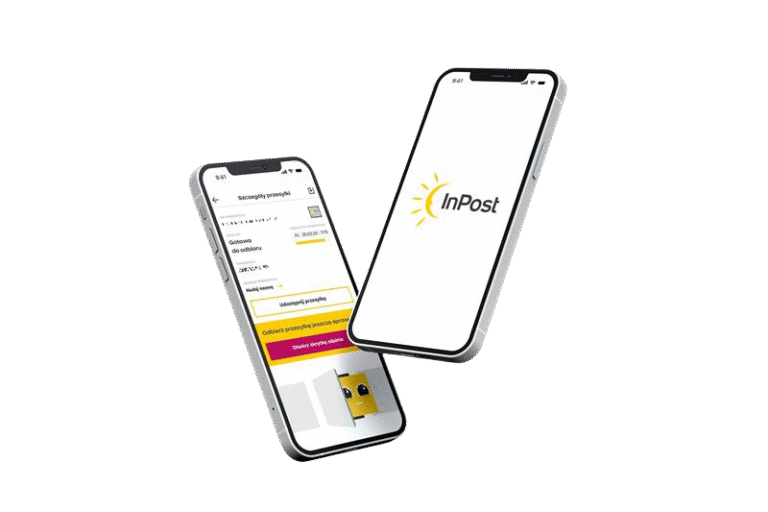
Case study > Mobile > Development of a Courier Application for InPost’s Logistics Operations

Edge One Solutions supported InPost in developing a dedicated Android application for couriers, designed as part of the company’s broader logistics ecosystem. The solution was built using .NET MAUI and C#, enabling future portability to other platforms, while local database support allowed the application to operate partially even without network access.
The project's goal was to create a dedicated tool for couriers that would become an integral part of the company's extensive logistics system. A key challenge was to design a solution that would truly support couriers in their daily duties – streamlining delivery processes, minimizing operational errors, and increasing work efficiency in a dynamic logistics environment. The tool had to be intuitive, reliable, and fully adapted to the specifics of fieldwork.

Edge One Solutions supported the development of a mobile application for couriers, focused on reliability, field usability, and integration with InPost’s broader logistics system.
The scope of work included:
• development of a dedicated Android application for couriers,
• use of .NET MAUI and C# for cross-platform-ready mobile development,
• preparation of the application as a client for a larger logistics system,
• support for courier access to data and tools needed in daily work,
• implementation of local database support,
• enabling partial application operation without network access,
• development of a configuration-based architecture,
• support for permission-based customization,
• preparation of the solution for adaptation to different markets,
• use of Git for version control and development collaboration.
The Edge One Solutions team developed an Android application using .NET MAUI and C#. This approach made it possible to create a mobile solution that can be ported to other platforms in the future at a lower cost than building separate applications from scratch.
The application acts a client for InPost’s larger logistics system. It provides couriers with access to the data and tools needed to perform their daily work more efficiently in the field.
A local database was used to support partial operation without network access. This is especially important in courier and last-mile delivery environments, where connectivity may vary depending on location and working conditions.
The architecture was also designed around configuration files and permissions. This made it possible to adapt the application to the needs of different markets without maintaining a separate version for each one.

In logistics and last-mile delivery, mobile applications used by couriers are not supporting tools — they are operational systems used directly in the field. Their reliability affects delivery efficiency, service quality, and the ability of teams to respond to changing conditions during the working day.
Applications of this type must combine usability, performance, data availability, and resilience to connectivity issues. Even limited offline support can be important when users operate in different locations and network conditions cannot always be guaranteed.
For logistics companies, developing mobile tools with a configuration-based architecture can also support international growth and market adaptation. Instead of building separate applications for each market, the organization can manage selected differences through configuration and permissions.