In the financial sector, choosing an IT outsourcing partner is a high-risk decision. The stakes are higher than in most industries, because business continuity, information security, compliance with organizational requirements and resilience to incidents are all on the line. Even a vendor that looks promising at first glance can become a serious problem if they are unable to operate under auditability requirements, access control and third-party risk management.
Table of contents

This guide has two goals. First, it structures what decision-makers should pay attention to when considering IT specialists outsourcing or broader IT outsourcing in financial services. Second, it provides a ready-to-use evaluation template and checklist that make it possible to compare vendors in a repeatable way.
“Best companies” rankings can be a good starting point, but in financial services they can’t replace verification of the criteria that really impact risk and the stability of the cooperation.
What is IT specialists outsourcing in the financial sector?
In financial services, the term IT outsourcing often hides two different cooperation models.
- The first is a situation where the partner takes responsibility for a specific area or service, for example maintenance of selected systems, development of a particular module or management of infrastructure.
- The second model is IT specialists outsourcing, i.e. supplementing the internal team with people with specific competencies. In this setup, specialists work in your project, according to your standards and within your way of managing work.
The financial sector uses both approaches, depending on the objective. IT staff outsourcing is often chosen when an organization needs to quickly close a competency gap, accelerate product development or strengthen the team in areas that are hard to recruit for. Handing over an entire area to a partner is more common when the organization wants to streamline maintenance, increase predictability or relieve internal resources.
It’s also important that the scope of cooperation in financial services is not limited to software development. Depending on the needs, it can include development, maintenance and support of systems, infrastructure, automation, testing and cyber security. That’s why before you start comparing vendors, you should clarify whether you need specific roles and competencies, a stable team for a defined area, or a partner who will take responsibility for a larger share of the work and risks.
Why the banking and financial sector has different requirements than most industries
In financial services, IT outsourcing is part of operational risk. This means that vendor evaluation cannot end with technical skills and price. What matters is the organization’s resilience to errors, failures and incidents, as well as whether the cooperation can be controlled and audited. The more critical the area covered by outsourcing, the more important access rules, information security, business continuity and risk management across the entire supply chain become.
The sector’s requirements also stem from regulatory frameworks and supervisory expectations. In simple terms, they can be summarized in a few principles:
the bank or financial institution must know what it is outsourcing, what risks are involved, how those risks are measured and how they are mitigated;
it must also have the ability to look into how services are delivered, including areas related to security and incident handling;
from the organization’s perspective, this means the need for structured oversight over outsourcing, and from the vendor’s perspective – readiness to work in an environment where “transparency” is not a nice-to-have, but a non-negotiable standard.
This is precisely why companies that perform very well in less regulated industries are not always a good choice for banking and financial services. If a vendor has immature processes, avoids talking about compliance or downplays security topics, risk increases from the very first day of cooperation. In financial services such an approach quickly leads to wasted time, costs on the client side and the need to urgently switch partners.
Requirements of banks and financial institutions towards an IT specialists outsourcing provider
Information security and access control
The provider should treat security as a prerequisite for entering into cooperation. The minimum is clear confidentiality rules, structured access to tools and environments, and a way of working with data that limits the risk of unauthorized access. Consistency also matters in financial services. If rules exist “on paper” but there is no real control in day-to-day work, a problem will appear sooner or later.
Auditability and transparency
Financial institutions must be able to verify how the service is delivered. This is not about revealing sensitive details, but about readiness to work in conditions where processes, roles, responsibilities and basic security practices are clearly described. A vendor that cannot present these elements in an organized way is usually not a good choice for a regulated organization.
Business continuity and incident readiness
In financial services, “downtime” is not just a technical issue. It’s a business and reputational risk. That’s why the approach to business continuity, incident response and crisis communication is so important. Already at the vendor selection stage, it’s worth defining how incidents are reported, who is responsible for coordination, how escalation works and what response time expectations look like.
Subcontractors and supply-chain risk
This is one of the most frequently overlooked areas, and at the same time crucial in the financial sector. If the provider relies on subcontractors, the risk related to continuity of staffing, access control and consistency of security standards increases. Therefore, you should explicitly ask about the use of subcontractors, the rules for involving them in cooperation, and the way they are verified and supervised. A lack of clear answers is a red flag.
In these areas, compromise is not advisable. Lack of compliance and a weak approach to security are not “details to be fixed later”. It is a risk that in financial services can dominate the entire project, regardless of the technical quality of the team.
Process maturity and predictability of cooperation
In the financial sector, a good outsourcing company is one that you can work with in a repeatable and measurable way. It’s not about excessive formalities, but about solid foundations: structured onboarding, clear roles and responsibilities, and a way of working that provides predictability. The more critical the area covered by the cooperation, the more important it is that the vendor can operate according to standards and stick to agreements.
It’s worth checking whether the vendor can propose simple cooperation metrics. They may relate to timeliness, quality, staffing stability, problem response times or reporting transparency. The mere existence of metrics is not enough. What also matters is whether they are regularly reviewed and whether they drive decisions – for example, about scaling the team or changing priorities.
Cooperation models in financial services
Filling roles in the team (team augmentation)
The vendor supplies individual people or several roles into your team. You retain full control over priorities and ways of working. This model works well when you have an owner on your side and want to quickly close specific competency gaps.
Dedicated team for a defined area
The vendor provides a team that works on a defined area, e.g. a product module, integrations or maintenance of selected components. You gain greater predictability and consistency, provided that you clearly define the boundaries of the area, cooperation rules and reporting.
Taking over an area or service by a partner (managed services)
The partner takes responsibility for a selected area, e.g. system maintenance, an infrastructure component or continuous support of part of the environment. This model makes sense when you want to relieve the internal team, but in financial services it requires particular attention to security, compliance, business continuity and incident readiness.
The best companies offering IT specialists outsourcing for the financial sector – ranking
Our list is not a “popularity ranking” or an attempt to name a single, universally best company. In financial services, such shortcuts usually lead to poor choices, because the success of cooperation depends on fit to the specific area, risk level, and security and compliance requirements.
Our approach is simple and stems from the criteria described earlier in this article. We evaluate each company in a fixed format, and not only based on general statements. We focus on three groups of indicators:
Scope and competencies: what cooperation model the company offers (filling roles, dedicated team, taking over an area), which roles and competencies are available, and whether the team can be scaled over time.
Security and transparency: whether the provider communicates security standards, access control approach, readiness to work in auditable conditions and the way incidents are handled.
Predictability of cooperation: whether onboarding, responsibilities, reporting, metrics (SLA/KPI) and the approach to staffing stability and limiting rotation can be clearly described.
Edge One Solutions
Positioning and scale
Edge1s specializes in IT specialists outsourcing and building dedicated development teams for medium and large organizations, in models ranging from staff augmentation to agile, autonomous project teams. More than 130 Edge1s specialists are currently working on projects for the banking sector (internal Edge1s data), which demonstrates a real scale of engagement in financial services.
Scope of IT outsourcing
The company provides specialists and teams in the following areas: custom development (Java, .NET, front-end, mobile), QA, DevOps, Data & AI, process automation, BPM/EAI and platform engineering (Dynamics, Salesforce, Atlassian, Adobe, Sitecore), with the ability to work on-site, remotely and in nearshore/offshore models (Poland, EU).
Fit for the financial sector
Edge1s delivers projects for, among others, large commercial banks in Poland – recruitment ads indicate cooperation with one of the largest and oldest banks in the country, serving both retail and corporate customers. The scope of work includes system development and integration, analysis and architectural support in highly critical areas.
Security and compliance
Cooperation with banks means working under NDA, structured access to client environments and adherence to security policies and data processing rules (including GDPR/DPA). Edge1s holds the ISO/IEC 27001:2022 certificate confirming the operation of an information security management system in projects delivered for clients, which is particularly important in a regulated environment. In addition, the company communicates experience in supporting financial institutions in regulatory areas (including preparing the Polish Development Fund for the implementation of the NIS2 directive), which strengthens its credibility as a partner who understands security and compliance requirements in the financial sector.
Cooperation model and way of working
Edge1s builds agile IT teams tailored to client processes – from individual roles, through scrum teams, to long-term engagements in a dedicated team model. The company emphasizes structured onboarding (product, domain, coding standards, tools), clearly defined roles on both sides and ongoing oversight by Delivery/Service Managers responsible for quality, retention and development of the cooperation.
Risks and limitations
The model assumes the presence of a co-owner of the cooperation on the client side (IT or business) who sets direction, defines priorities and makes decisions. In the case of niche technologies, the team start time may depend on the availability of specific experts, and the full list of references and detailed security processes is usually available only after signing an NDA.
Euvic
Positioning and scale
Euvic is an international technology group that states on its website that it has 6,000+ software engineers, more than 100 specialized teams, and operations across multiple locations in Poland and abroad. From the perspective of a ranking for the financial sector, this makes it a partner with strong capacity to build teams and support different cooperation models — from providing individual experts to delivering larger, specialized teams.
Scope of IT outsourcing
Euvic offers both staff augmentation and dedicated teams, as well as broader IT outsourcing services. In its public materials, the company describes augmenting the client’s existing teams with its own engineers, building hybrid and dedicated teams, and providing managed IT services covering areas such as network management, operating systems, databases, IT security, backups, user support, updates, and technology consulting.
Fit for the financial sector
The company has a separate offer dedicated to the finance and insurance sector and communicates experience in areas such as AI, big data, cloud computing, business intelligence, and fraud detection and prevention. It also publicly presents examples of projects delivered for the financial industry, including a case related to the modernization of the loan servicing process for a large mortgage and lending institution, as well as the implementation of a transactional platform for insurance sales and policy handling for TU Europa. This suggests that Euvic is not a generalist provider, but a company with actual references in financial services and insurance.
Security and compliance
Euvic publicly states that it holds ISO/IEC 27001 certification, and the published SGS certificate for EUVIC S.A. confirms compliance with ISO/IEC 27001:2022. The scope of the certification covers software development, implementation, and maintenance delivered in a managed team model, which is particularly relevant for banks and financial institutions assessing a vendor’s security maturity. In materials dedicated to the financial sector, the company also emphasizes IT security, fraud prevention, and support for projects delivered in compliance-driven environments. At the same time, publicly available materials do not provide a full and detailed description of incident handling procedures, audit models, or subcontractor oversight, so these areas should be verified during the RFI/RFP stage or under NDA.
Cooperation model and way of working
One of Euvic’s strengths is the clear distinction between its cooperation models. In staff augmentation, the company describes supplementing the client’s existing team, offering a hybrid model, and following a process that includes defining missing competencies, selecting specialists, client-side verification, and onboarding. In the dedicated team model, it emphasizes an approach in which the remote team operates as an extension of the client’s organization. In managed IT, Euvic highlights delivery based on SLA and KPI frameworks, which increases predictability in more operational scopes of work.
Risks and limitations
The breadth of Euvic’s offer is an advantage, but in practice it requires a very precise definition of which cooperation model is actually covered by the agreement: augmentation, dedicated team, or managed services. In the financial sector, this is important because responsibilities, SLA/KPI scope, access rules for environments, and the division of operational risks depend on it.
Asseco Poland
Positioning and scale
Asseco Poland is one of the key IT solutions providers for the banking sector in Poland and Central and Eastern Europe, developing systems for commercial banks, cooperative banks and other financial institutions.
Scope of IT outsourcing
Asseco delivers comprehensive banking systems – including Asseco Core Banking, which supports retail, corporate, mortgage and cooperative banking – as well as payment solutions, regulatory reporting, data warehouses and analytical systems. Cooperation most often takes the form of implementation projects and long-term maintenance, and less frequently simple body leasing of individual specialists.
Fit for the financial sector
The company has been present for many years in rankings of IT solutions for banking (e.g. IT@BANK), and its systems are used by numerous banks in Poland and across the region. It performs well in large, complex transformation programs and core banking modernization.
Security and compliance
Asseco designs systems compliant with supervisory and regulatory requirements of the financial sector, ensuring business continuity (24/7 architecture), support for high transaction volumes and integration with solutions that meet KNF (Polish FSA) and European regulatory requirements.
Cooperation model and way of working
Cooperation is dominated by medium- and long-term contracts covering implementation, development and maintenance of core systems, with an extensive layer of governance, formal SLAs and change management processes.
Risks and limitations
A strong reliance on proprietary platforms and solutions may increase dependency on a single vendor, which is why it’s important to secure clear service agreements, software development rules and exit scenarios when working together.
BlueSoft
Positioning and scale
BlueSoft is a Polish IT company specializing in systems integration, digital transformation and bespoke software. It has been delivering solutions for leading Polish financial institutions for many years.
Scope of IT outsourcing
BlueSoft offers services in development, integration (ESB, API, microservices), data & analytics and cloud (cloud consulting, migrations, platform management). In practice, project teams (dedicated teams) and transformation projects dominate, not pure body leasing.
Fit for the financial sector
The company has extensive experience in banking, financial services and investments – it supports banks in, among others, integrating omnichannel solutions, front-office and back-office systems and building modern data architectures.
Security and compliance
Executing projects for large banks requires working in line with security, auditability and business continuity requirements. BlueSoft emphasizes that it designs and integrates solutions that support both innovation and regulatory compliance.
Cooperation model and way of working
Project teams working in fixed scope or T&M models, with the option to transition into long-term maintenance and evolution of solutions. There is a strong emphasis on architecture and integration – BlueSoft is a good match where the core challenge is “wiring together” multiple banking systems.
Risks and limitations
A strong focus on integration and transformation projects means that the bank needs a clear architecture and integration owner on its side to avoid dispersed responsibilities across multiple integrators.
ITDS Polska
Positioning and scale
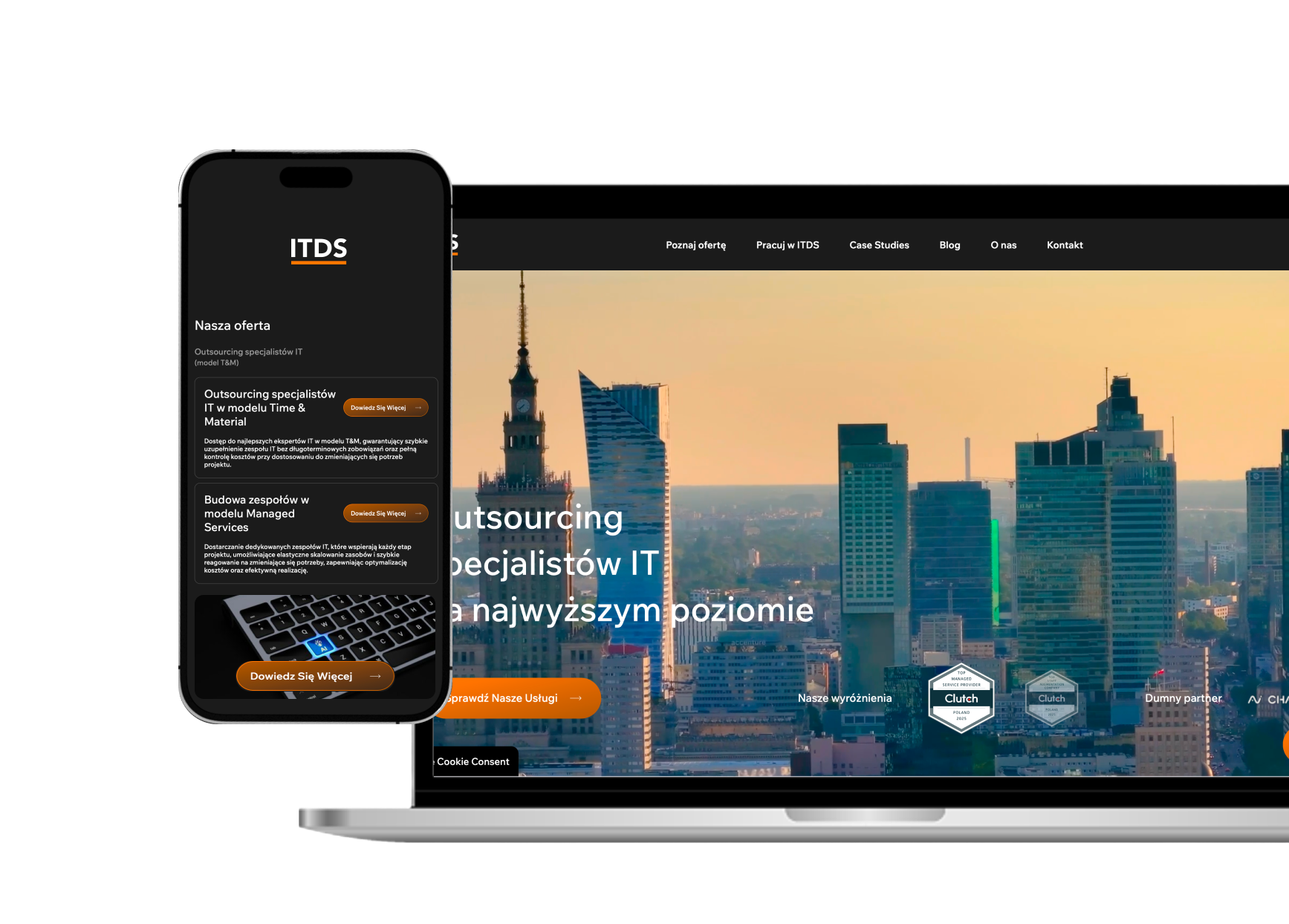
ITDS Polska is a consulting and outsourcing company specializing in outsourcing IT engineers and delivering projects mainly for the Finance and Fintech sectors, as well as retail, healthcare and other industries. In Poland, it works with over 350 experts, and across several countries with a total of more than 600 IT specialists.
Scope of IT outsourcing
ITDS offers outsourcing of specialists in a Time & Material (IT contracting) model, and builds project teams in the areas of software development, integrations, cloud/DevOps, cyber security, AI and data engineering.
Fit for the financial sector
The company explicitly communicates specialization in the Finance and Fintech verticals, and in Poland most of its projects are delivered for banks, financial institutions and insurers.
Security and compliance
Delivering projects for regulated institutions requires working in line with compliance and security standards – ITDS emphasizes experience in environments with high regulatory requirements, although detailed procedures are usually discussed individually with each client.
Cooperation model and way of working
Agile teams and individual experts in a staff augmentation model, fast scaling of resources, work most often in the client’s processes, tools and standards.
Risks and limitations
This is a strongly contract-based model – success depends on whether there is a clearly defined owner and decision-making process on the bank’s side. Otherwise, the vendor “just provides people”, and full responsibility for project outcomes remains with the financial organization.
7N
Positioning and scale
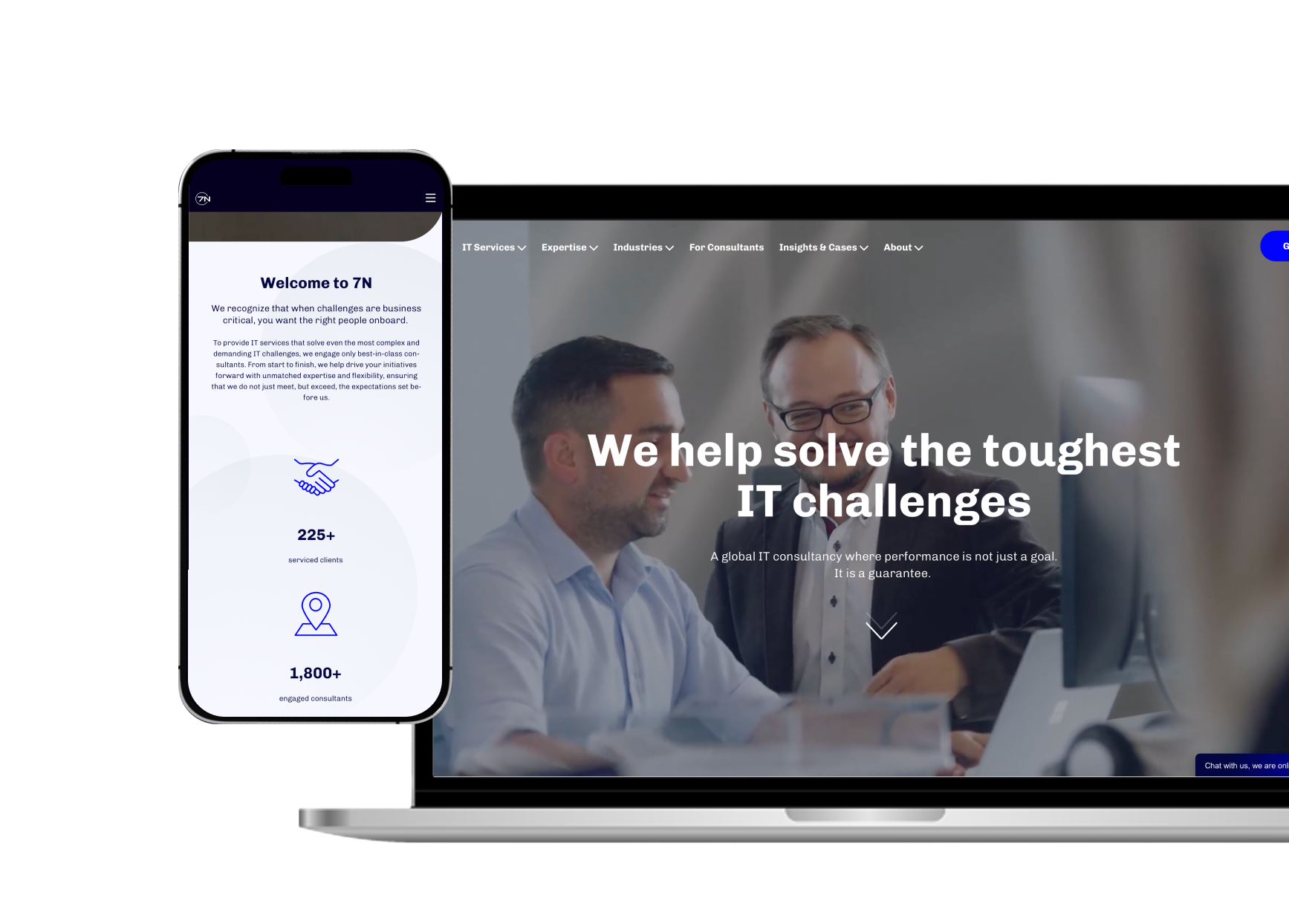
7N is an international consulting company focusing on contracting and IT consulting. Globally, it works with around 1,600 consultants, and in Poland – according to available data – with several hundred experts (approx. 800–1,100 people). A significant part of its portfolio consists of clients from the financial sector.
Scope of IT outsourcing
7N supplies experts and teams in development, project management, business & systems analysis, quality assurance and IT architecture, mainly in body leasing / IT contracting models.
Fit for the financial sector
The company has a dedicated offering for banking & finance – 7N consultants support core banking projects, investment systems and regulatory systems from implementation to maintenance, with an emphasis on responsible data management and security.
Security and compliance
Cooperation with banks and investment institutions requires working in auditable conditions – 7N declares end-to-end project lifecycle support that takes into account security standards, governance and good practices in data management.
Cooperation model and way of working
Transparent billing model, agency-style setup (consultant – agent – client) and strong focus on selecting top specialists (marketed as “top 3% IT professionals”).
Risks and limitations
A strong focus on “experts on contracts” means that project management, architecture and priorities remain on the bank’s side – this is not an end-to-end provider responsible for overall project outcomes.
Scalo
Positioning and scale
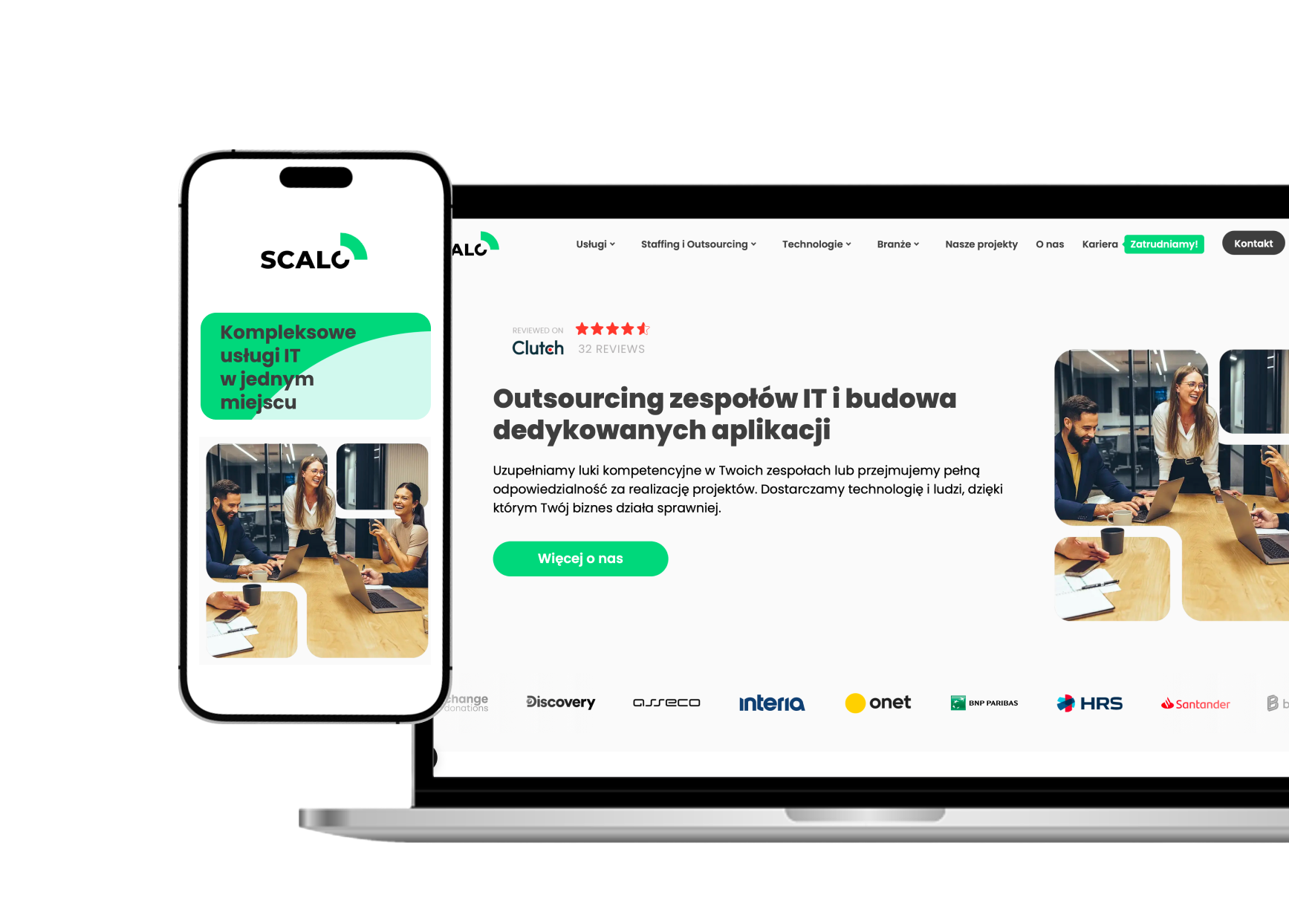
Scalo is a Polish software company with many years of experience in building software and development teams for clients from banking, fintech, media, manufacturing, automotive and e-commerce, among others.
Scope of IT outsourcing
For the banking sector, Scalo designs and implements applications that address specific bank challenges – from streamlining internal processes, through front-office and mobile systems, to advanced analytics, data/AI and CRM solutions.
Fit for the financial sector
The company emphasizes that its teams understand the regulatory and technological realities of the banking sector well, and that its solutions are tailored to the needs of the industry, ensuring transaction security and high customer service quality.
Security and compliance
Scalo communicates that it can be entrusted with, among others, regulatory compliance matters, data protection, digital transformation and operational efficiency optimization in banking, including in the context of new regulations (e.g. DORA).
Cooperation model and way of working
Scrum teams, agile approach, strong DevOps, data engineering and QA components. Case studies show projects based on microservices that enable faster deployment of changes in banking systems.
Risks and limitations
When modernizing many critical systems in parallel, strong architectural governance on the bank’s side is essential to maintain a coherent target architecture and consistent priorities across streams.
Sii Polska
Positioning and scale
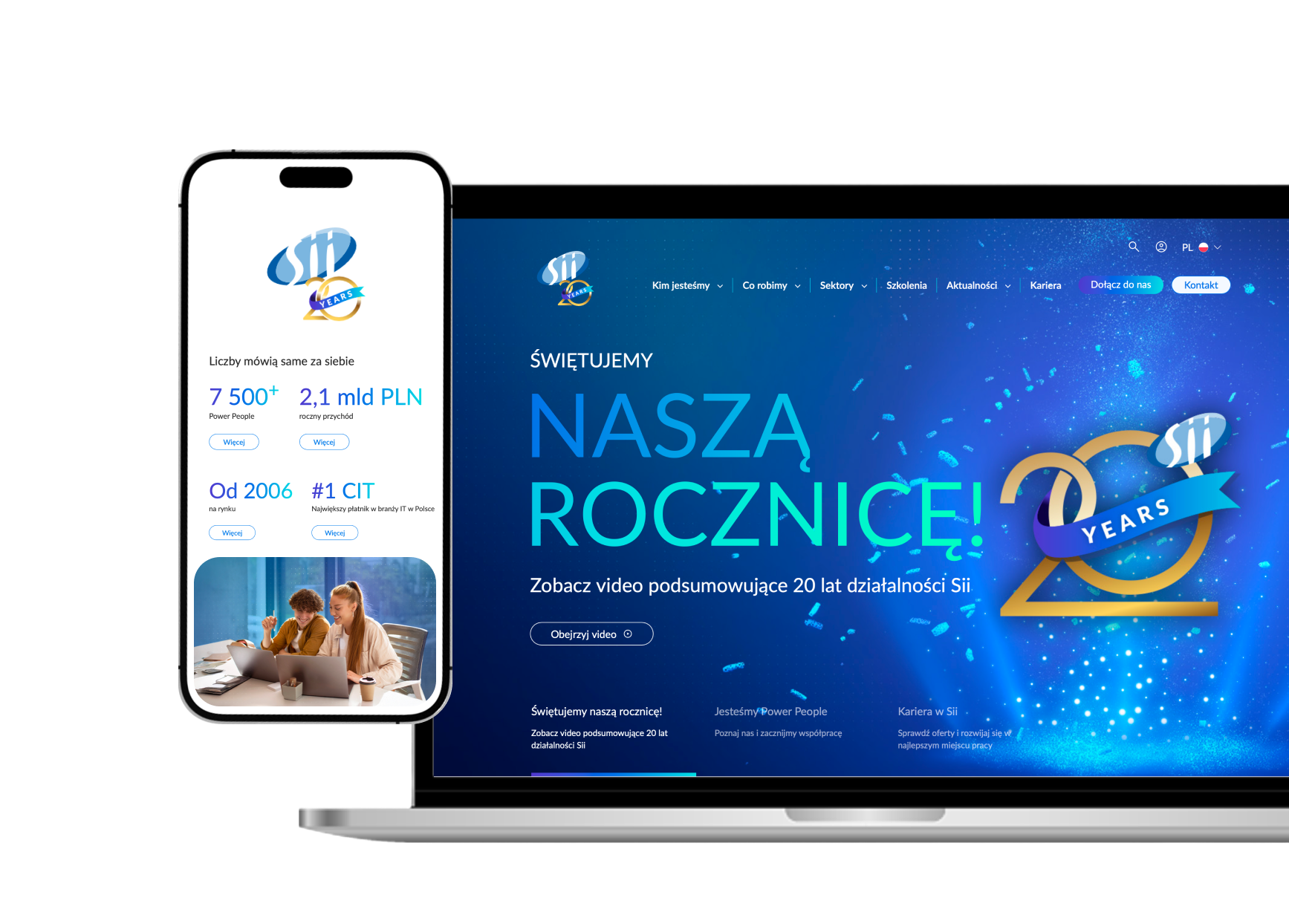
Sii Polska is one of the largest providers of IT, engineering and business services in the country, employing over 7,300 specialists and delivering projects for clients in many sectors worldwide. Banking and financial services are among the company’s key sectors.
Scope of IT outsourcing
In the financial sector, Sii offers development teams, QA, business & systems analysis, cloud and infrastructure services, data & analytics, process automation (including RPA) and integrations such as biometrics with online and mobile banking, or data warehouse migration to the cloud.
Fit for the financial sector
A dedicated offering for retail banking and business banking covers digital banking projects, process optimization, cloud migration and implementation of advanced analytics.
Security and compliance
Sii delivers projects compliant with financial sector requirements – in areas such as data security, access control and regulatory compliance (PSD2, AML, supervisory guidelines). In BPO/financial operations, the company communicates working according to ISO standards for quality and security (including ISO 27001, ISO 9001).
Cooperation model and way of working
Sii offers a wide spectrum of models – from body leasing, through dedicated scrum teams, to end-to-end projects and managed services (including maintenance and development of selected systems), with the option to scale teams up and down.
Risks and limitations
Given the size of the organization, it is crucial to clearly define who on the Sii side is responsible for a given area (Account/Delivery Manager) to avoid blurred accountability between business lines and maintain a consistent cooperation model.
How to use this ranking – a practical checklist for assessing vendors in the financial sector
The following checklist helps you compare IT outsourcing companies in a structured way. You can use it to build a shortlist, and then as a conversation plan with vendors. The more critical the area covered by the cooperation, the less room there is for generalities.
Scope and competencies
Is the scope of cooperation clearly described (roles, team, taking over an area)?
Does the proposed seniority mix match the criticality of the area and the level of risk?
What does availability and the possibility of quickly scaling the team look like?
How does the vendor limit rotation and ensure continuity of staffing?
Security, transparency and incidents
Are there standards for working with data, confidentiality and access control?
Can the vendor describe its practices in an auditable, consistent way?
How are incidents handled: communication, escalation, roles, response times?
How do they approach business continuity and contingency planning?
What is the share of subcontractors and how is the supply chain supervised?
Oversight and measurability of cooperation
Can cooperation metrics (SLA/KPI) and a reporting cadence be agreed?
Are roles and responsibilities on both sides and the escalation path clearly defined?
Can the vendor adapt the cooperation model to the type of work (development, maintenance, security)?
In financial services, IT outsourcing should be evaluated primarily through the lens of risk and cooperation stability, and only then through rates. A good outsourcing company is one that fits your context, can operate in a predictable and measurable way, cares about continuity of staffing and treats security and compliance as a standard.
If, at the discussion stage, you encounter vague statements, avoidance of the subcontractor topic, lack of clear access rules or “we’ll clarify that later”, it’s a clear signal that the risk may end up being shifted onto your organization.
Edge1s – professional IT specialists outsourcing you can trust
Choosing an IT outsourcing company should not come down to comparing rates. The best provider is not “the biggest company in the ranking”, but a partner aligned with your goals and way of operating. If you want to limit risk and increase the chances of smooth cooperation, focus on a few key areas.
Well-designed IT specialists outsourcing allows you to move faster, scale competencies and maintain control over quality. There is one condition. Your choice has to be based on criteria that genuinely impact outcomes, not just on how good the offer looks.
If you are considering IT staff outsourcing and want to work through the cooperation model, competencies and security requirements in a structured way, get in touch with Edge1s. We will help you tailor the approach to your objectives, pace and constraints, so that cooperation is stable, predictable and secure.